
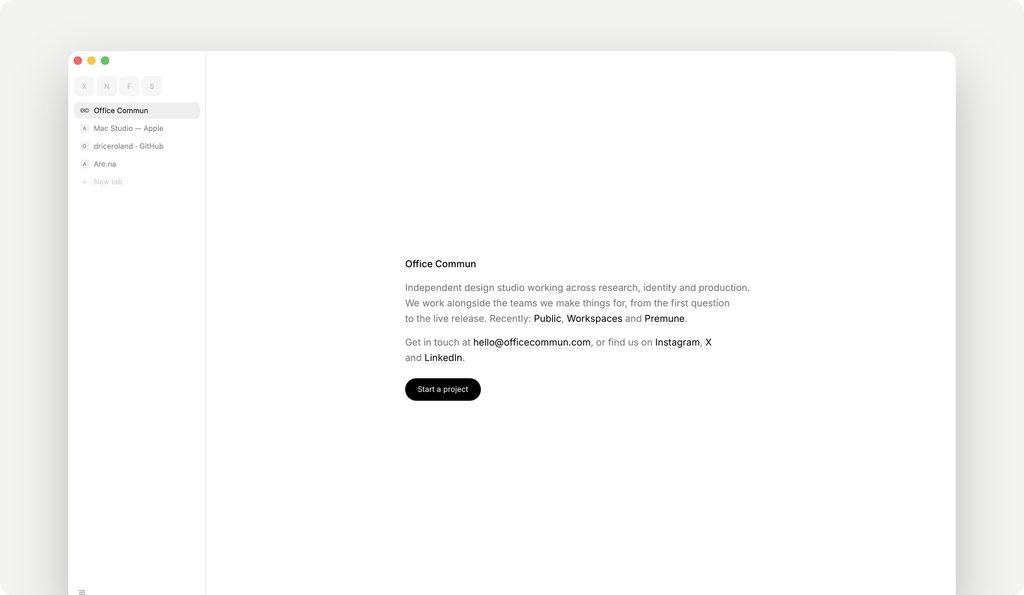
Search is a new open-source browser for Mac and iOS that aspires to be like a super-lightweight version of The Browser Company’s Arc, with vertical tabs, workspaces, and built-in ad blocking. The entire browser is about 10 MB, and the minimalist design is striking. I found out about it through another tech blog.
Looks neat! But while reading through the product page I noticed some telltale signs of AI copy. Then I found that Drice Roland, a software designer based in France, acknowledged having written the app with Claude, and is now leaning on open-source to further its development.
I’ve written before that AI alone isn’t disqualifying when I’m deciding what to recommend, and I’m not naive enough to think that AI isn’t involved in writing code for many popular apps. But when it comes to indie projects, my litmus test looks like this:
- Did AI write the app?
- If so, does the developer bring some other kind of unique expertise (or even just passion) that justifies the app’s existence?
- If so, does AI still represent some kind of liability?
The last point is where we have a problem. The Browser Company itself allowed a major security vulnerability in Arc in 2024, and the security burden was apparently part of its reason for pivoting from Arc to Dia a year later. The company employed five security engineers (up from one for Arc) for Dia alone.
I’m not saying every browser needs a huge security team, but an entirely vibe-coded browser is a bridge too far for me. What happens if the developer decides it’s not worth spending the Claude tokens on anymore, and the open-source contributors get bored and move onto the next thing? At minimum, a browser needs regular updates to the underlying engine (in this case, WebKit), and given the browser’s potential to leak all kinds of sensitive data, you at least want a knowledgeable software developer to steer things in the right direction.
I used to love trying cool new browsers like this, but AI has made me much more wary of any browser without a strong security track record.