

Is the new Fire TV Stick 4K really faster? It depends.
Testing Amazon’s claims about its newest Fire TV stick.
 Jared Newman |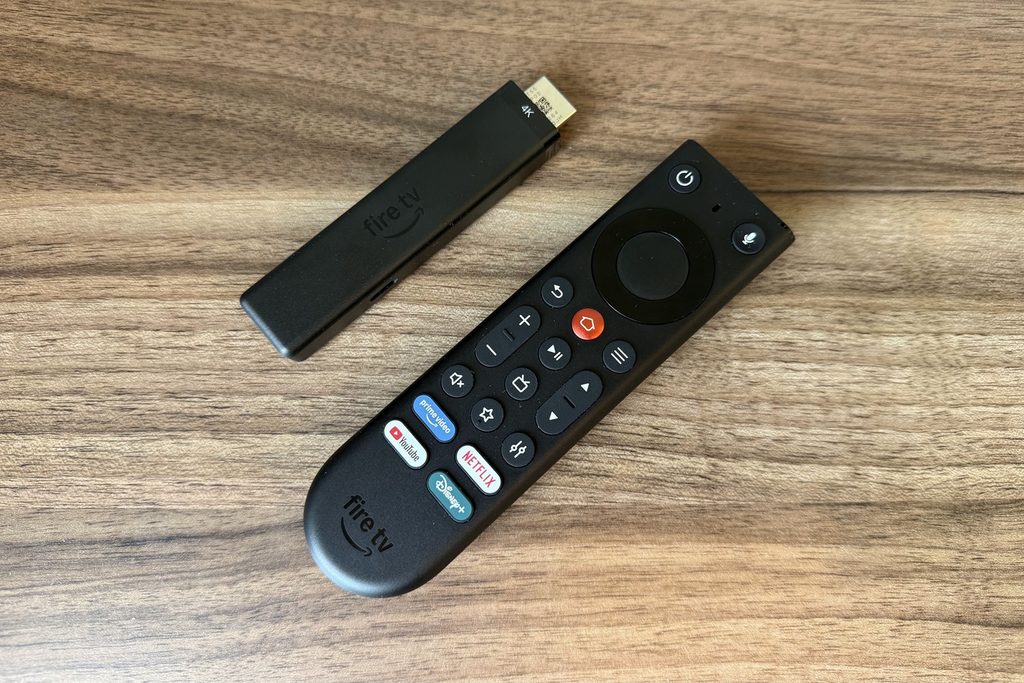
Last week, Amazon launched a new Fire TV Stick 4K with a bold claim: It’s nearly 20% to 40% faster, the company says, than “a similarly priced 4K streaming stick from another leading brand.”
Amazon won’t name the competitor, but in my own tests, the advantage over comparably-priced streamers isn’t so clear-cut.
What I tested
Amazon’s own comparison video is impossible to test because it doesn’t show real-world results. Instead, it’s just a mock-up “for illustrative purposes,” based on Amazon’s measurements of “time from content selection to playback” in “the three most popular apps.” In addition to not naming the rival streamer, Amazon won’t say which apps it tested.
So I decided to conduct my own measurements instead, looking at how long a few similarly-priced streamers take to boot up, wake from standby, and start streaming. I also measured their ability to quickly switch between different apps.
For these tests, I pitted the new Fire TV Stick 4K against Walmart’s Onn 4K Plus and Roku’s Streaming Stick Plus. Both Amazon’s and Roku’s sticks cost $60 and are often on sale for less. Walmart’s device is small box rather than a streaming dongle, but it has a cheaper regular price of $50. (Walmart also sells a less-powerful dongle for $40, but that’s not a fair comparison unless Amazon lowers the Fire TV Stick 4K’s retail price.)
Boot times
Here’s how long it takes fully load each streaming device’s home screen after unplugging it and plugging it back in again.
- Fire TV Stick 4K: 23 seconds
- Onn 4K Plus: 33 seconds
- Roku Streaming Stick Plus: 22 seconds
Roku has a slight edge here, though in most cases it won’t matter. If your device is plugged into an outlet, or your TV’s USB port supplies power when it’s off, rebooting will be a rare occurrence.
(That said, it’s too bad Amazon’s and Roku’s streamers no longer ship with wall chargers or lengthy USB cables. If you want to plug them into an outlet—for instance, because your TV’s eco mode disables USB power when it’s off—you’ll have to bring your own charger.)
Launching Netflix
For this test, I waited until each streaming device’s home screen was fully rendered, then timed how long it took to load Netflix and start playing a video:
- Fire TV Stick 4K: 32 seconds
- Onn 4K Plus: 43 seconds
- Roku Streaming Stick Plus: 39 seconds
I also ran a second test, waiting an extra 30 seconds before jumping into Netflix. This gave each device more time to fully boot:
- Fire TV Stick 4K: 15 seconds
- Onn 4K Plus: 23 seconds
- Roku Streaming Stick Plus: 19 seconds
The Fire TV Stick 4K was the clear winner on both cases, validating Amazon’s claim of being 20% to 40% faster than the competition at least when Netflix is involved.
Launching Apple TV
While testing, I noticed that Netflix was launching faster from boot-up than other apps. To rule out any potential special treatment, I decided to run the same tests as above with the Apple TV app:
- Fire TV Stick 4K: 30 seconds
- Onn 4K Plus: 33 seconds
- Roku Streaming Stick Plus: 29 seconds
And here are the results with a 30-second wait after booting:
- Fire TV Stick 4K: 25 seconds
- Onn 4K Plus: 24 seconds
- Roku Streaming Stick Plus: 27 seconds
Interestingly enough, the Fire TV Stick 4K loses its advantage here, though the results are pretty similar across all three devices.
Fast app switching
The only thing better than an app that loads quickly is one that loads instantly. To that end, I tested how many apps you can switch between before any of them required a full reload:
- Fire TV Stick 4K: 3 apps
- Onn 4K Plus: 5 apps
- Roku Streaming Stick Plus: 4 apps
The Onn 4K Plus has 2 GB of RAM, versus 1 GB on the other streamers, so it’s no surprise that Walmart’s box can keep more apps in memory. While its boot times are slower, it can feel faster as a result.
Waking from standby
Both the Fire TV Stick 4K and Onn 4K Plus enter sleep mode after 15 to 20 minutes of inactivity, while Roku streamers just show a screensaver indefinitely. Here’s how long each of them took to get back to their home screens:
- Fire TV Stick 4K: 5 seconds
- Onn 4K Plus: 2 seconds
- Roku Streaming Stick Plus: 2 seconds
While Amazon’s Fire TV Stick 4K is a few seconds slower, you’ll probably end up waiting longer for your TV to power on anyway.
Looking beyond load times
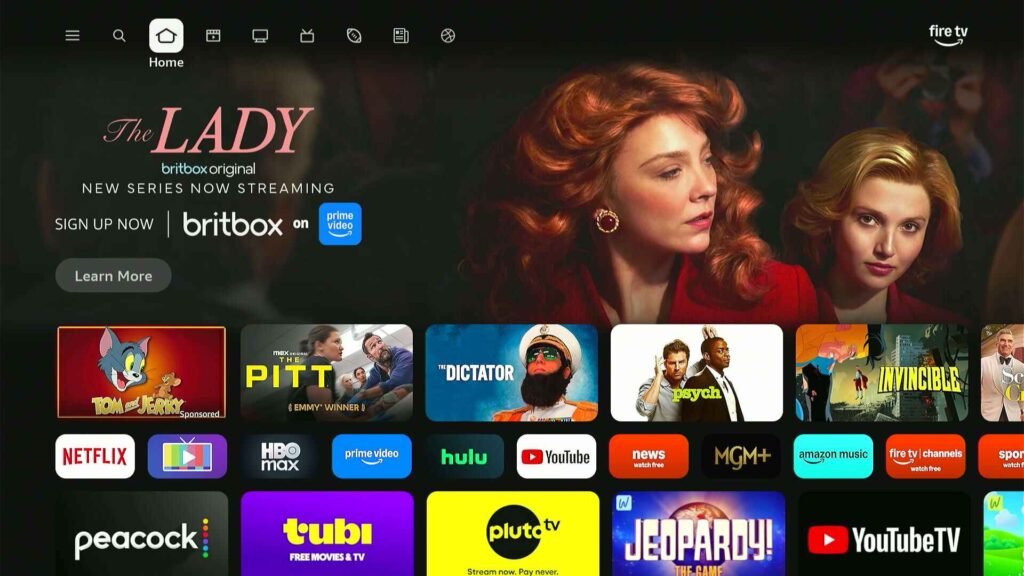
While it’s fun to measure these things and deflate Amazon’s marketing, ultimately a few seconds’ difference in load times won’t make or break the experience. What really matters is how easy it is to find what you’re looking for in the first place.
On that front, the new Fire TV Stick 4K is similar to Amazon’s other streamers, with the same major home screen redesign that started rolling out earlier this year. It looks and behaves similarly to the Google TV software on Walmart’s Onn devices, but of course with more emphasis on Amazon Prime content.
It’s also running Amazon’s new Vega operating system, which has more limited app support and does not allow sideloaded apps. The new system is more for Amazon than for you, but it’s also inevitable as Amazon says it won’t make any new streaming devices based on its old Android-based platform.
All of which means that if you’re okay with the Fire TV experience, the new Fire TV Stick 4K could be a nice upgrade. Just don’t expect it to help you get where you’re going much faster.
Sign up for Jared’s Cord Cutter Weekly newsletter for more streaming TV advice.