

It’s a great time to threaten to cancel cable internet
Comcast and Spectrum are desperate to keep internet customers aboard. Take advantage while you can.
 Jared Newman |
As an Advisorator member, you have access to ad-free, uncluttered versions of every cord cutting column I’ve written, dating back to 2014. View the full archives here, and see all your membership benefits here. Thanks, and enjoy!
Last week, I secured my lowest price for Spectrum internet in years.
All it took was a call to Spectrum’s retention department, which is where you end up after telling the automated system that you want to cancel. After a mildly tedious conversation with an exceedingly friendly rep, my monthly bill dropped from $68 to $45 per month for the next year, and my speeds increased from 400 Mbps to 500 Mbps.
While I can’t guarantee the same results everywhere, in general it’s a great time to threaten to cancel cable internet service. For years, Comcast and Charter (which operates the Spectrum brand) have boasted to shareholders that growth in home internet more than offsets the collapse of cable TV, but now they’re also losing internet customers to faster fiber and cheaper wireless 5G alternatives. They are highly motivated to keep potential defectors on board, and you should take advantage.
What competition looks like
Last year, Spectrum and Comcast respectively lost 508,000 and 411,000 home internet customers. The year before, Comcast lost 66,000, while Spectrum lost 61,000. Stock prices for both companies are below what they were two years ago.

By contrast, fiber and home internet are growing. T-Mobile and Verizon respectively added 1.7 million and 1.5 million wireless home internet customers in 2024, while AT&T added 1 million customers on the fiber side. Their stocks are all up from two years ago.
This isn’t rocket science: Wireless home internet is cheaper than cable, with plans starting at $35 per month for T-Mobile and Verizon when bundled with mobile service. Fiber, meanwhile, offers equal upload and download speeds, which aren’t always available with cable, and it can be cheaper as well. (AT&T’s 500 Mbps plan, for instance, costs $75 per month on a non-promotional basis, $10 per month less than Comcast.)
Cable providers should have reckoned with this new reality years ago. Instead, they resorted to scare tactics and misinformation. Comcast and Charter both rolled out ad campaigns to convince people that they didn’t actually want cheaper internet service, which they later had to modify for being misleading. Comcast then tried to advertise its internet plans as “10G” in a desperate attempt to look better than 5G (despite being unrelated technologically). Advertising watchdogs pressured Comcast into dropping that line of attack as well.
Only now are the cable giants doing what they should have done all along, which is to actually compete.
Cable’s response
Comcast, for instance, announced a somewhat-simplified set of home internet plans last week, starting at $40 per month for 300 Mbps service on a one-year price guarantee. (Customers can also pay a higher price of $55 per month to lock in that rate for five years.) These new plans also reverse a longstanding policy to enforce data caps in most markets.
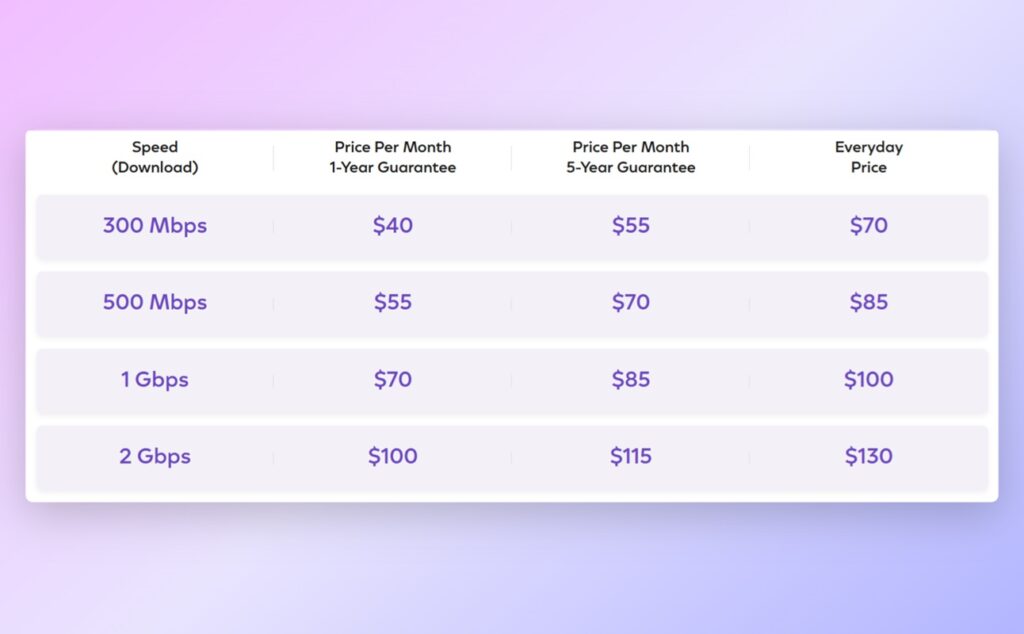
Last year, Comcast also launched a separate pair of internet plans under its “Now” brand, priced at $30 per month for 100 Mbps and $45 per month for 200 Mbps. Those plans don’t include data caps either.
Spectrum’s response hasn’t been as splashy. It’s been more focused on increasing internet speeds and bundling more services together, including free streaming services on the cable TV side and an offer of $30 per month home internet (at 500 Mbps) when bundled with two mobile lines. It’s also been scrapping hidden fees and trying to improve customer service.
But here’s the problem: Cable companies don’t want to hand out big discounts to existing customers if they can avoid it. While Comcast says its new packages are available to anyone, existing customers have to call in to make the switch, and I’ve heard from a few readers who’ve run into problems getting the plans they want.
That’s where threatening to cancel comes in.
What you should do about it
As my experience with Spectrum has shown, negotiating a lower home internet price is all a matter of reaching the right representative. That means bypassing the standard customer service department and skipping straight to the one whose goal is to keep you from cancelling. Often you can accomplish this through the automated answering system by selecting the options that lead to cancelling your service.
I understand this can be nerve-wracking. If you have no intention of switching providers, you certainly wouldn’t want the cable company to call your bluff and cut you off without warning.
But that’s a pretty unlikely outcome. Cable companies operate retention departments for the express purpose of pumping the breaks on cancellation and talking things out first. They also have access to promotions that standard customer service reps don’t. (Every Spectrum retention specialist I’ve ever talked to has relished pointing this out.)
If it makes you more comfortable, just approach the subject in a circumspect way. Once the retention rep is on the line, tell them you’re thinking about cancelling, or you want to discuss the logistics of cancelling at a convenient future date. In my experience that’s enough to set the promotional gears in motion.
And if that doesn’t work, maybe it’s time to look into other options. There are more of them available now in more places, much to the cable companies’ dismay.
Sign up for Jared’s Cord Cutter Weekly newsletter for more money-saving advice.