

How ad-free streaming became so much less affordable
And how to push back against the price hikes.
 Jared Newman |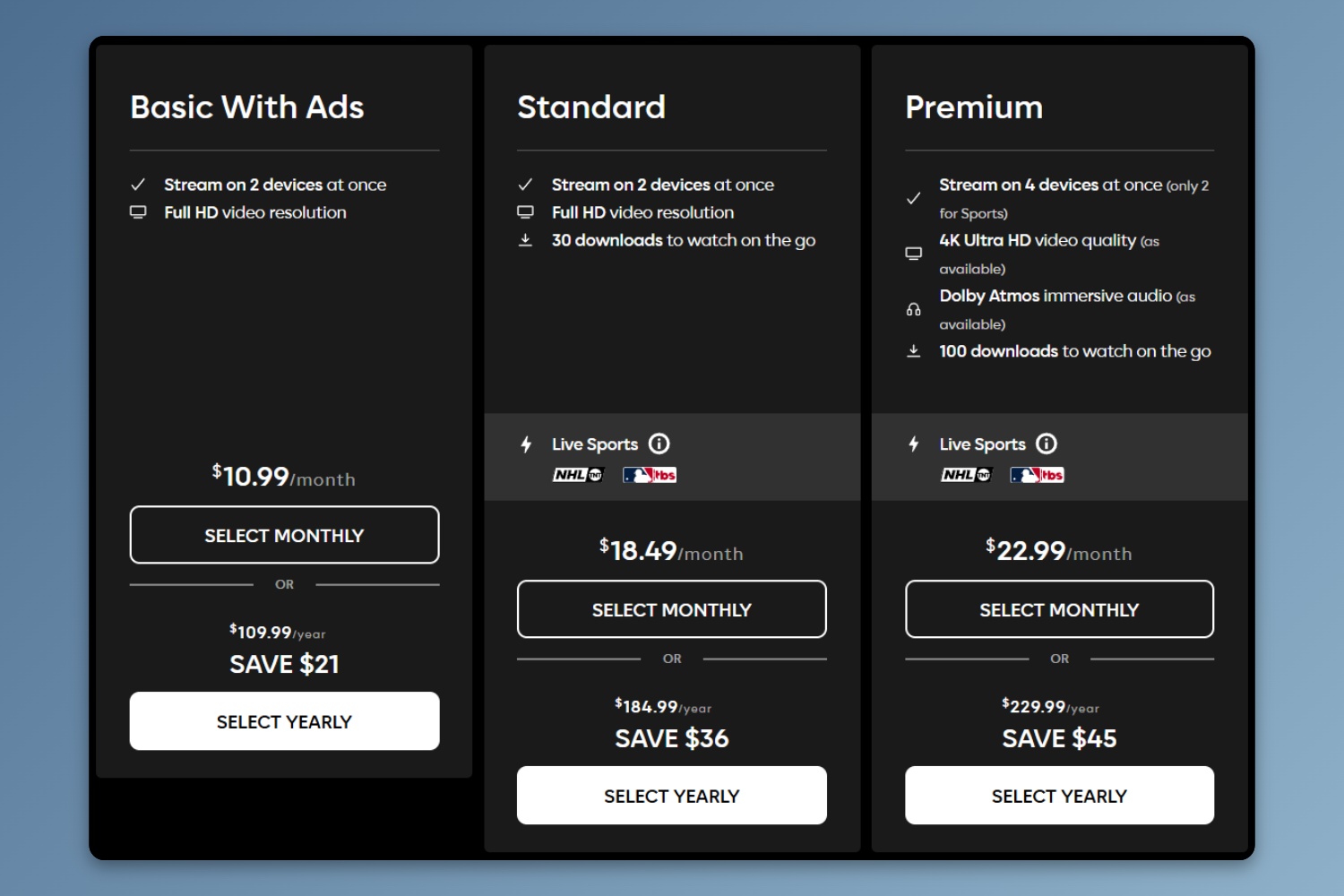
Ad-free streaming used to be one of the biggest benefits of cutting the cable TV cord. Now it’s become a luxury.
Inspired by some new research into the growing price gap between ad-supported and ad-free streaming, I decided to calculate how much the cost to avoid commercials has increased over time. Depending on which services you have, you could be paying an extra $42.50 just to skip ads, up 60% from a few years ago.
Not all hope is lost for affordable ad-free TV, but you might have to a bit creative to get it.
The increasing ad-free tax
My impetus for writing this is a new report from Ampere Analysis about the growing gulf in price between ad-free and ad-supported streaming. The study found that globally over the past three years, the ad-free tiers of Netflix, Amazon Prime, and Disney+ have increased by $1.61 on average, versus $1.21 per month with ads.
Those results actually understate the problem. When you look at the United States in particular include more streaming services, the ad-free tax becomes even bigger.
Let’s say you’re a subscriber to Netflix, Amazon Prime, HBO Max, Disney+, Paramount+, and Peacock. At the end of 2022 (when both Netflix and Disney launched ad-supported tiers), the total cost would have been roughly $44 per month with ads, or $70.50 without ads, for a difference of $26.50.
Those same six services now cost roughly $63 per month with ads, or $105.50 per month without ads. While the overall price has increased on both sides, the difference between ad-free and ad-supported plans has jumped by 60%, from $26.50 to $42.50 per month.
Here’s a closer look at how the price gap has grown over the years:
| Dec. 2022 (ads / ad-free) | Sept. 2026 (ads / ad-free) | Ad-free fee increase | |
|---|---|---|---|
| Netflix (Standard) | $6.99 / $15.49 | $8.99 / $19.99 | +$2.50 |
| Amazon Prime Video | $8.99: Ad-free only | $8.99 / $13.98 | +$4.99 |
| HBO Max | $9.99 / $14.99 | $10.99 / $18.49 | +$2.50 |
| Disney+ | $7.99 / $10.99 | $11.99 / $18.99 | +$4.00 |
| Paramount+ | $4.99 / $9.99 | $8.99 / $13.99 | $0.00 |
| Peacock | $4.99 / $9.99 | $12.99 / $19.99 | +$2.00 |
| Total | $43.94 / $70.44 | $62.94 / $105.43 | +$15.99 |
Amazon is the biggest offender. At the start of 2024, it started including ads in Prime Video and charged $3 per month to remove them. The ad-free price then jumped to $5 per month last March, with a plan that Amazon now calls “Prime Video Ultra.”
Other companies were more subtle in pushing ads on users. Disney initially indicated that its ad-supported tier would cost less than the ad-free plan. When that plan arrived in late 2022, Disney raised the price of for ad-free streaming and slotted in its new ad-supported plan at the old price. Netflix, meanwhile, phased out its “Basic (Ad-Free)” plan in 2024, making the jump to ad-free streaming more drastic. And Peacock has raised prices so aggressively that even its ad-supported plan costs more than the ad-free version once did.
In all cases, the dynamic is the same: As Ampere points out, subscription growth is leveling out in the United States, and streamers are increasingly relying on advertising to boost their revenues. While ad-free streaming becomes more of a luxury, the streamers still need to keep ad-supported prices low so they can bring in new subscribers and scale up their advertising businesses.
Ad skipping still remains alive and well in the realm of live TV streaming services such as YouTube TV, Sling TV, and Fubo. Those services include cloud-based DVRs, so you can record live TV and skip the commercials. But as more viewers opt for cheaper standalone streaming services, the streamers are now ushering the DVR toward obsolescence.
What you can do about it
In some cases, bundling services together may provide price hike relief, even on ad-free tiers.
Disney, for instance, has actually shrunk the price gap for its bundle of Disney+ and Hulu. That package cost $10 per month with ads or $20 per month without ads a few years ago. Now it’s $13 per month with ads, but still $20 per month without ads. The bundle of Disney+, Hulu, and HBO Max has also maintained the same $13 per month upcharge for ad-free over the past couple years, even as the overall cost has increased. (It’s $33 per month for all three without ads.)
The growing price gap may also create an opportunity for more affordable ad-free services.
I keep writing about how YouTube is taking over TV viewing in the United States, and it now has 125 million subscribers on its Premium or Music plans. If you just want to skip ads on YouTube, Premium Lite for $9 per month can look like a pretty good value compared to traditional streaming services.
Keep an eye on Roku’s Howdy streaming service as well. At $3 per month with no ads, the catalog is heavy on B-movies and forgotten reruns, but has some hidden gems that remind me of Netflix’s early days. It reportedly topped 1 million subscribers in less than a year, and it continues to grow its catalog with new licensing deals.
If you’re up for a more adversarial approach, you can also take ad-skipping into your own hands.
I’ve previously written about PlayOn, which records video from ad-supported streaming services and lets you skip the commercials. Using it can be a hassle, as it requires either pay-as-you-go cloud recording credits or a Windows PC to run the recording engine, but the savings can be significant.
If you’re willing to watch through a web browser, the Multi Skipper extension will attempt to fast forward through commercials on major streaming services for free. I’ve been using this on my still-experimental living room PC setup with great success, and while relying on a computer for streaming has its own trade-offs, it’s one of the last ways to retain some control in a system that’s increasingly stacked against its viewers.
Sign up for Jared’s Cord Cutter Weekly newsletter for more streaming TV advice.